 Shanghai Zimai Safety Technology Co., Ltd.

Can a mask, glove, or ear plug have a CE mark and pass a buyer’s check? Sí. It can if the papers are not precise model matches.
This guide is based on the EU regulations and websites of Shanghai Zimai Safety Technology Co.,Ltd. The firm states it has over 30 años’ expertise in exporting PPE. CE marking for PPE involves a paper trail, not simply a label.
CE marking for PPE is the maker’s undertaking that a product complies with Regulation (UE) 2016/425. It is made up of four elements: risk categorization, conformity assessment, technical documentation, and an EU declaration of compliance. Only for Category II and III items is a notified body.
Key Takeaways
- The risk category sets the path.
- You do not always need a notified body.
- The papers must match the exact model.
- A test report alone is not enough for CE.
What Does a CE Mark on Protective Equipment Really Tell You?
CE marking is the maker’s own assertion that the product satisfies relevant health and safety standards. It is neither a quality grade nor a test mark.
What It Is and What It Isn’t
- It is a legal claim of the creator, supported by documents.
- That’s not a lab report. It does not show that all models were tried.
- Not the same as ISO 9001. That’s a look at how a corporation is operated.
ZIMAI has ISO 9001:2015 y ISO 14001:2015 proceso de dar un título . These describe how the firm operates. They do not substitute for CE documents for each product.
CE Marking for PPE Step by Step: From Risk Check to Market Entry
- Verify the product as PPE under the Regulation.
- Select the risk category (Annex I).
- Basic standards of safety (Annex II). For instance, most manufacturers employ harmonized standards.
- Perform the conformance evaluation for that category.
- Prepare the technical documentation (Annex III).
- Draw up the statement of compliance (Annex IX).
- The CE mark, the product label, and the instructions should be included.
What Does the EU PPE Regulation Say, and Who Must Do What?
The EU PPE Regulation date is 9 March 2016. It superseded Directive 89/686/EEC; It has been in force since 21 April 2018. It is a regulation; therefore, the same regulations apply in each member state.
Annex Map
| Annex | What it covers |
| I | Risk categories |
| II | Essential health and safety requirements |
| III | Technical documentation |
| IV to VIII | Conformity modules A, B, do, C2 and D |
| IX | EU declaration of conformity |
Who Has a Duty
The creator saves the papers. They are checked by an authorized representative, an importer and a distributor before sale.
PPE Risk Categories I, II and III: Which One Fits Your Product?
PPE danger categories indicate how significant the injury may be. Higher risk will necessitate more external inspections.
| Category | Risk | Annex I examples | Route |
| I | Minimal | Superficial mechanical injury; weak-action cleaning materials; hot surfaces up to 50 °C; sunlight to the eyes; non-extreme weather | Module A (Annex IV) |
| II | Risks other than I and III | Everything not listed in I or III | Module B (Annex V) + Module C (Annex VI) |
| III | Very serious or irreversible harm, or death | Harmful substances, oxygen-deficient air, harmful biological agents, ionising radiation, falls from height, electric shock, drowning, chainsaw cuts, high-pressure jets, harmful noise, and others | Module B + Module C2 (Annex VII) or Module D (Annex VIII) |
The maker picks the category. Check that choice against Annex I.
Does Every PPE Product Need a Notified Body?
No. A notified body is not required for category I. Category II requires one for EU-type assessment. This is a check on the design of the product. Category III Module C2 or Module D required for that inspection and for a check on manufacturing.
What It Does and Where It Shows Up
Module B is a design check of the body. For Category III it also examines how the product is created, in Module C2 or D. The name, number and certificate reference of the statement of compliance. The number of Category III also adheres to the CE mark.
How to Confirm a Body Is Genuine
Look up its number in the EU NANDO database.
Harmonized Standards: How EN Tests Prove the Safety Requirements
Article 14 refers to a presumption of conformance arising from a harmonized standard. That implies if you obey the standard, the law thinks you satisfy the rule. You don’t have to go by standards. But they are the shortest way.
Standards Named on ZIMAI’s Pages
| tipo de EPI | Standard on the site |
| Filtering half masks | EN 149 |
| Particle filters | EN 143:2021 |
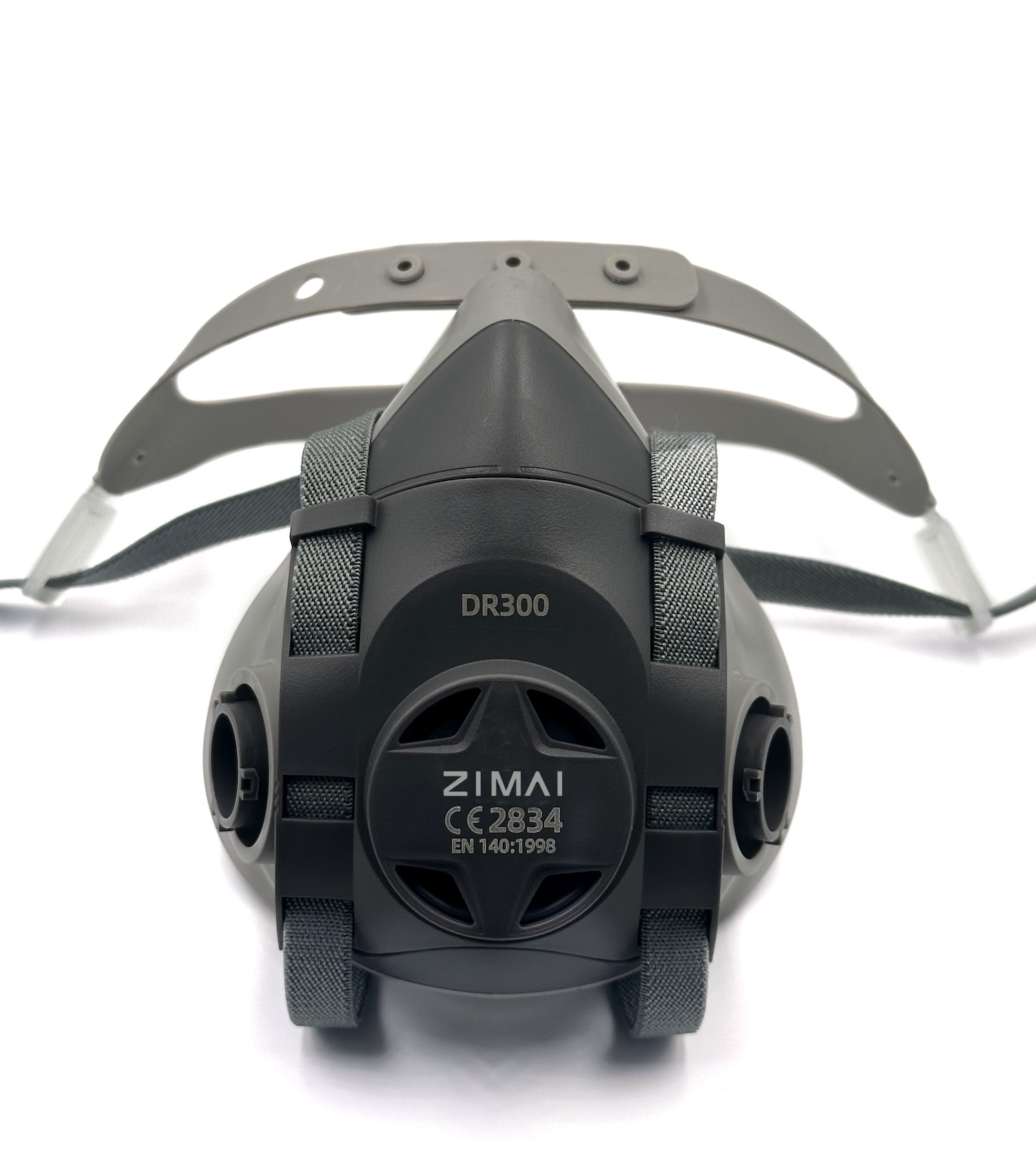
| Half masks | EN 140:1998 |
| tapones para los oidos | EN 352-2 |
| Calzado de seguridad | EN ISO 20345 |
This table shows which standard fits which PPE type. It does not say anything about a certificate. ZIMAI’s Standard hub also covers gloves, garments, cascos, eye protection and chemical protective clothing. All the rules are subject to modification. See the most recent edition in the Official Gazette.
Inside the Testing Stage: Lab Reports, Type-Examination and Production Checks
A lab report is proof. It is not a CE certificate.
- For Category II and III, an outside body checks the design and samples. Then it gives an EU type-examination certificate.
- Modules C, C2 and D check that the products you make match the approved type.
- The EN 149 page lists some tests. They check how well the filter works, how easy it is to breathe, and fit and leakage.
The Paper Trail: Technical Documentation and the EU Declaration of Conformity
What Goes in the Technical File (Annex III)
The file contains a product description, design data and a risk check. It indicates which safety guidelines the product conforms to and which standards have been implemented. It also includes test results, certifications and user instructions. The creator must hold on to it for 10 years after the product goes on sale.
What the Declaration Must Say (Annex IX)
Each manufacturer or authorized representative should draw out a declaration. The same is true for all categories. It has to be based on the Annex III file. It identifies the product, the manufacturer, the Regulation and the applied standards. It also provides information about the exterior body, if one was utilized.
Where the CE Mark Goes and What Else Must Appear on the Product
For CE marking for PPE, the mark must be easy to see and read. It must not be removed. Try on the product before you buy it.
If the product is too little, place the mark on the package and papers. The product also requires the name and address of the creator. It requires a kind and a batch or serial number. The instructions must be in a language readable by the user.
How Buyers Can Check a Supplier’s CE Paperwork Before Ordering
You can check CE marking for PPE with five questions. Ask about the exact model, not the whole product family.
- Is there a compliance statement for this model?
- If Category II or III, is there a type-examination certificate?
- Are the correct standard and version identified in the test reports?
- Is the body’s number in the NANDO database?
- Does the product label match the papers?
Beware of red flags. The marking indicates CE, but there is no declaration. The certificate is for another model. It’s an old classic. ZIMAI’s article on hazard-based PPE procurement also tells buyers to match each claim to its paper.
What ZIMAI Shows on Its Own Site About PPE Certification
Shanghai Zimai Safety Technology Co., Ltd. is a self-described manufacturer and supplier based in Shanghai. Its webpage states the following concerning CE marking for PPE and quality:
- It is ISO 9001:2015 y ISO 14001:2015 certificado. SEDEX and BSCI audit some of the factories.
- Most gloves, zapatos de seguridad, mascarillas, and Hi-Vis clothing are CE approved.
- For additional PPE vendors, ZIMAI shares the testing and certifications with important in China.
Its product pages give examples. DF030 lists EN 143:2021. DR300 lists EN 140:1998. E002L lists EN352-2 with SNR 27 dB. TC300 lists Types 3B/4B/5B/6B. Ask for papers for the exact model. Use the Inquiry or Obtener una cotización página. You can also email sales@zmsafety.cn or call +86 21 67766378. Hours are Monday to Friday, 8.30am a 6pm.

Preguntas frecuentes
-
Is CE marking mandatory for PPE sold in the EU?
Sí. You can’t sell PPE in the EU unless it’s CE marked. The mark indicates conformity with Regulation (UE) 2016/425.
-
Who affixes the CE mark?
The manufacturer does. For Category III, the mark is followed by the number of the notified body.
-
How long must technical documentation be kept?
The creator should retain it for ten years. Once the product is on the market, the clock begins ticking.
-
Are harmonized standards mandatory?
No. You don’t have to utilize them. If you do, the law presumes you satisfy the rule.
-
Is a test report the same as CE certification?
No. One piece of evidence is a test report. CE also requires the correct module and a signed declaration.
Conclusión
The category sets the route. The papers prove it. Check each paper against the exact model before you buy.
Do you want PPE with clear standards on each product page? Look at the Other PPE category from Shanghai Zimai Safety Technology Co., Ltd . You can also send an inquiry . The company is a good fit if you want one supplier for PPE from head to foot. Its site lists ISO 9001:2015 y ISO 14001:2015. Ask for the papers for your model first.