 Shanghai Zimai Safety Technology Co.,Ltd.

Why does a glove that seemed safe in a dry yard become unsafe the moment sleep hits a tool handle? It’s a question Crew leads ask every season and the answer is rarely more padding. Site use and glove standards point in the same direction: winter work gloves are rated for cold, not for wet grip.
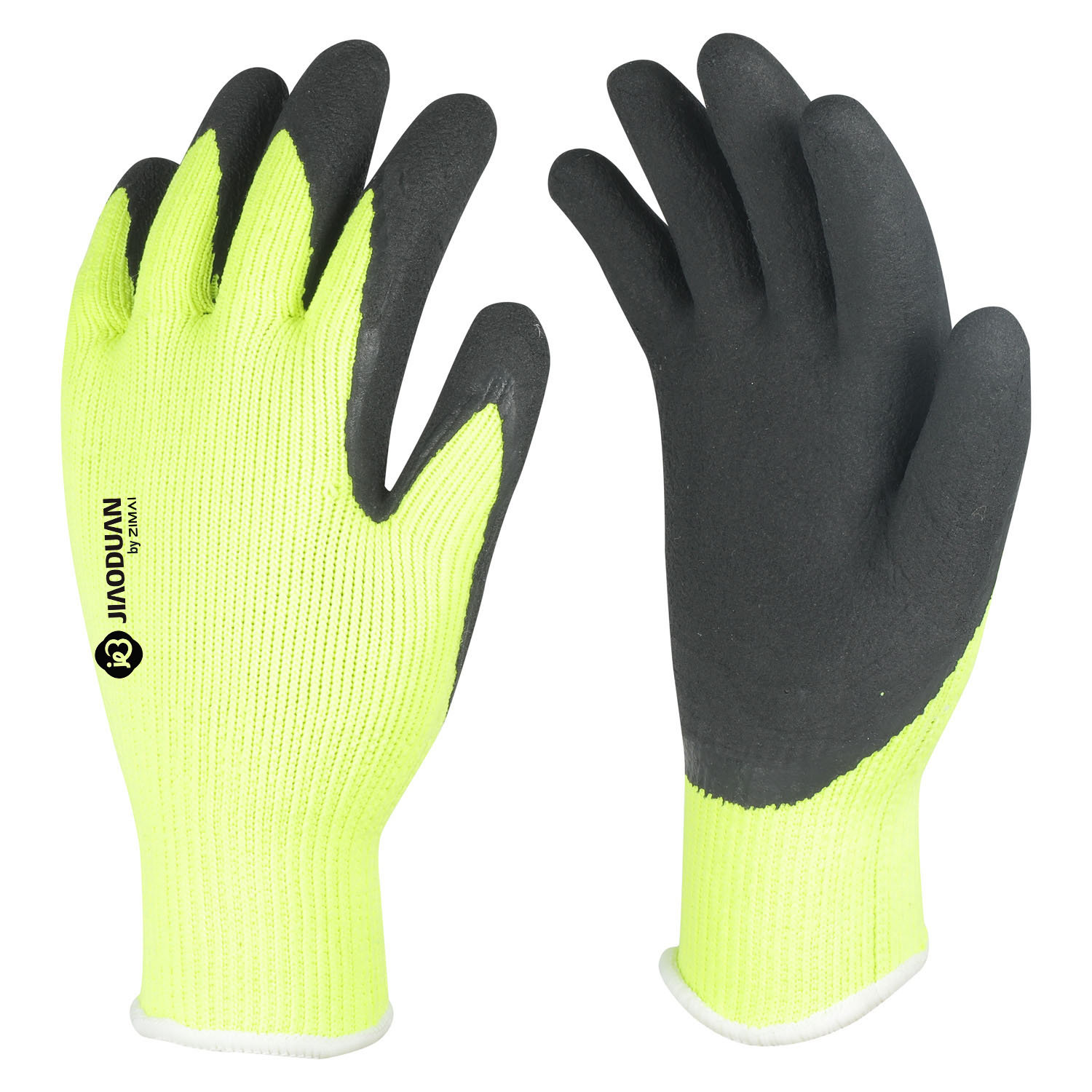
Winter work gloves grip three things in wet snow, a palm coating that keeps friction under a thin layer of water. This rough or grainy surface pushes that water aside and waterproofing keeps the lining dry so the hand still moves freely.
This guide explains the difference between melting snow and dry cold. It includes all types of coating, waterproof structures. It concludes with a shopping list and quick answers to common questions.
What Is Wet-Snow Grip in a Cold-Weather Glove?
Wet-snow grip is how well a winter work gloves holds a tool when there is a thin film of melted snow between the palm and the surface. It does not cut safety or wear life, it is no warmth. A couple can score high on all three and still be down in the slush.
Includes 3 controls. The coating supports the base. The water moves the surface pattern. The shell decides how long both are.
Which Glove Feature Controls Which Failure?
| Glove Feature | What It Controls | Sign It Has Failed |
| Palm coating material | Base hold on wet steel, timber or plastic | Tools turn in the hand under light load |
| Surface pattern | Removal of the water film at the touch point | Hold feels fine dry, vague once snow melts |
| Waterproof build | A dry lining and steady finger control | Fingers stiffen; the palm feels heavy and cold |
| Lining and fit | Press between the hand and the coating | A loose palm bunches; hold drops |
Why Is Wet Snow Harder on Grip Than Dry Cold?
Wet snow cuts because it places a layer of water between two hard surfaces. Dry cold doesn’t. A warm hand melts the snow it touches, so the film never clears. Gloves winter work selected for nothing but their warmth can go south in minutes. “This is normal weather. It’s not unusual.” Road, rail and yard crews spend most of a shift holding wet metal.
Three Ways Melting Snow Changes Hand Performance
- Water cuts any time, no matter how grippy things are when they’re dry.
- Melt is nearly constant, since a working hand runs a lot warmer than the snow.
- A stiff, wet fabric is heavy and gets in the way of fine finger work.
What Makes Winter Work Gloves Grip in Wet Snow?
The coating, surface pattern and waterproofing all combine to give grip in wet snow. The coating determines the wet grip of the material. The pattern determines how much of that hold is left under the film of water. The length of the pair’s work is determined by the barrier.
Each point can be checked on the product sheet before ordering.
-
Coating: Why Does Material Choice Change Wet Hold?
Coating material establishes the baseline hold. King of wet and dry work, latex still is. Global Industrial’s coating guidance recommends nitrile for oil contact and strong dry hold. A water shedding coating is not the same as a gripping one. A smooth face can shed water and still be slippery. The hold depends on the material and the shape.
-
Texture: How Does a Surface Pattern Push Water Away?
The surface pattern is controlled by simple mechanics. The micro-foam and sandy finishes create small cells and raised grains. These push fluid away from the object, so some coating still touches it. Crinkle patterns allow liquid to run off the palm during heavy, wet work. The palm is smooth. The water has no outlet. The film is then held in place over the entire touch area.
-
Waterproofing: Why Does a Dry Lining Protect Finger Control?
Waterproofing is sold on the strength of warmth but it keeps out just as well. When the lining gets wet, the palm pulls away from the coat and the grip is lost. A wet pair also cools faster, further reducing finger control.
Which Palm Coating Performs Best When Snow Melts?
When wet, slushy work, textured latex is your strongest choice. Sandy Nitrile is next to the oil. Polyurethane is good for the bench, but not for clearing snow, and bare knit shells are the worst because they do not displace the film of water.
How Do Coating Types Compare for Cold, Wet Work?
| Coating | Wet Hold | Oil Contact | Best Fit |
| Textured Latex | Strong | Limited | Wet handling, snow clearing, general site work |
| Sandy or foam nitrile | Strong | Good | Mixed wet and oily work, machine tasks |
| Polyurethane | Fair | Limited | Light bench work that needs a fine touch |
| Bare knit shell | Weak | Poor | Dry, light duty only |
The point is brief. Match the coating to what you put on the palm. Ensure the finish is textured, not smooth.
How Does Waterproof Construction Actually Work?
Waterproof winter work gloves have a membrane between the shell and lining to prevent liquid. Only a water resistant pair will slow it. That gap over a long shift determines whether the padding stays dry.
What Separates Waterproof From Water-Resistant?
- There is a membrane in the building. It keeps liquids out and lets some sweat out.
- Seams are important because stitch holes can leak even when the outer cloth does not.
- Water resistant finishes rub and wash off.
- This EN 511 summary has a third digit for water entry. 1 means the glove was waterproof for 30 minutes in the tests, 0 means it was not.
Which Standards Cover Cold, and Which Ignore Grip?
EN 511:2006 defines cold in 3 categories, cold air, contact cold and water entry. EN 388:2016 tests for wear, cut, tear and puncture and the published EN 388 guidance states it has no grip score whatsoever.
It is a significant gap. There is no cuff mark for a palm’s action in slush. Hold is determined by coating type, finish and a short trial on the actual job.
How Should Gloves Match Different Winter Conditions?
Select the glove for the main risk, not the coldest day of the year. Slush needs the coating and barrier first. Deep, dry cold forces attention to insulation and wind protection.
Which Feature Leads in Each Condition?
- Wet, slushy sites: The gloves for winter work in mild freeze regions are in demand because of a textured coating with a sealed barrier.
- Deep, dry, cold: padding, strong contact-cold rating, water film is less stable
- Mixed weather: all three points even Work winter gloves have to deal with the change from hour to hour.
- Oil & fuel: nitrile with a sandy finish instead of plain latex.
Most crews are in the mix. That is why balanced outdoor work gloves for winter beat single-purpose picks.
Warmth or Durability: Which Should Come First?
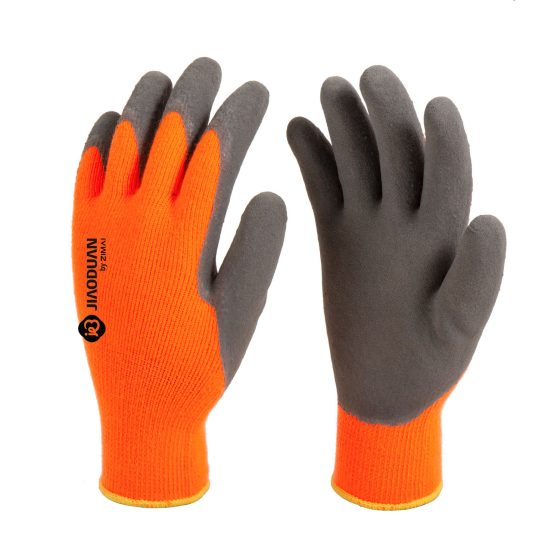
Nobody should be driven to the limit on their own. More padding makes it warmer but also adds bulk. Bulk decreases pressure between the hand and the coating and transports drops with it. Stronger palms mean more durability, but don’t do anything for wet grip by themselves.
Durable winter work gloves are worth it for hard-wear jobs like rigging and rebar. Warm winter work gloves pay off on routine duty, like gate watches or checks. In between is a decent winter work glove with a textured palm.
What Should Buyers Check Before Placing an Order?
First look at the build, then the price. A lot of bad buys start with one belief: Thick gloves for winter work have to be safe gloves.
A Five-Point Specification Check
- Ensure the barrier is a membrane and not just a water-repellent finish.
- Identify the palm coating/finish such as sandy latex or foam nitrile.
- Check the third digit of EN 511 where water entry is relevant.
- Match the weight of the padding to the real working temperature, not the seasonal low
- Trial one size run on site before volume fit changes hold
Frequently Asked Questions
Why do some gloves not grip in wet snow while they feel grippy when they are dry?
They lose their grip because a film of water forms between the palm and the object, decreasing friction. The dry feel is not the precursor of the wet feel.
- And just a textured finish pushes that film aside.
- The water is held in place by smooth coatings.
What is the best palm coating for wet winter conditions?
Textured latex is great for general wet/cold handling. Where there is oil also, sandy nitrile is the preferred choice.
- Latex still dominates in wet and dry conditions.
- Nitrile is a lot better for fuel and oil.
Are Winter Work Gloves Waterproof Out of the Box?
Nope. Gloves are waterproof only if they are made with a membrane or sealed barrier layer, and many padded gloves are only water-resistant.
- Water-resistant finishes resist water until they fail.
- EN 511 digit three indicates a 30 minute test result.
More padding doesn’t always mean a better cold-weather glove.
Not by yourself. The additional padding provides warmth but diminishes finger control and may push the palm away from the load.
- Bulk lower press and feel.
- Balance padding and coating quality.
Winter work gloves lifespan?
Service life is determined by wear, wash and dry habits not a set period. Standard endpoints are splitting seams and worn coating.
- Dry pairs away from direct heat sources at room temperature.
- Replace when the palm pattern is worn smooth.
Heated gloves, do they replace a good coat?
Nope. Heat is soothing but doesn’t change the grip on the surface so a heated pair with a smooth palm will still slip in slush.
- Heat treats the cold, not the water film.
- The grip factors remain coating and pattern.
Conclusion
Grip in wet snow is a unified system dependent on three things: coating material, surface pattern and true waterproof build. But warmth alone doesn’t deliver it, so each point deserves a direct check on every product sheet.
Sourcing worth a look is Shanghai Zimai Safety Technology Co., Ltd. Its cold-proof hand protection range is built on this logic. Buyers who need a fixed barrier level can verify the build with the supplier before ordering.